Museum Lyceum
From time to time, the Mill Museum presents public programs on various history, textile, and current events topics by guest speakers. We call these programs Museum Lyceums. Historically, the originally Lyceum was a garden in ancient Athens where the great Greek philosopher and teacher Aristotle held outdoor classes. Over time, the word came to be applied to lecture halls, where interesting speakers held forth on educational subjects. Lyceums were especially popular in the 19th century, hosting speakers like Ralph Waldo Emerson and Henry David Thoreau. Willimantic had its own early 1800s lyceum hall, called Franklin Hall, named for Benjamin Franklin, considered at the time the epitome of the educated, scientific, witty “Renaissance” person. The hall (rebuilt in the late 1800s) is still there, hidden away on the third floor above the historic brick storefront that today houses the “Cupcake for Later” bakery. In addition, the two rooms on the third floor of the Mill Museum’s main building, built in 1877, together known as Austin Dunham Hall, were a library and another lyceum hall. Nowadays, the Museum holds most of its lecture-type programs in Dugan Hall, on the second floor of the Dugan Building — a space that in the 20th century was used for lectures and educational programs, among other things.
-

On the Italian Front in World War I
Talk by Roger Benham and Heather Shepheard on the Italian Front during World War I. -
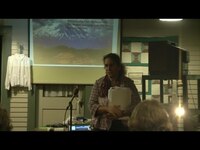
The Armenian Genocide
Talk by Ruth Hartunian-Alumbaugh on the Armenian Genocide. -
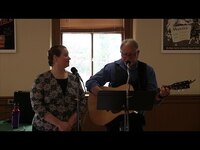
Music of the Civil War
Program on the music of the Civil War, presented by Rick Spencer and Dawn Indermeule, co-sponsored with the Windham Historical Society. -
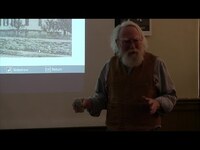
The Road to the Poor House
Talk by Michael Westerfield, former Director of the Willimantic, CT Housing Authority, on his research into poor houses and poor farms in Connecticut. -

The Nonprofit Murders
Book reading by Diana K. Perkins from her novel in which a librarian at the Guilford Smith Library in South Windham, CT falls victim to foul play, investigated by a police detective and a museum curator. Part of Perkins's Shetucket River novels set in eastern Connecticut. -
The European Refugee Crisis in Lesvos, Greece
Talk by Heather Shepheard and Roger Benham on the European refugee crisis on the Greek island of Lesvos. -

Irish Storyteller
Storytelling performance by Katie Hill accompanying an exhibit on Irish migration to Willimantic, CT in the 19th century, presented in Dugan Hall. -
The Irish in Connecticut
In May of 2016, Connecticut State Historian Dr. Walter Woodward and his Band of Steady Habits visited the Windham Textile and History Museum (the Mill Museum) for a combination lecture, slide show, and musical performance on “The Irish in Connecticut.” The performance accompanied an exhibit on Irish migration to Willimantic, CT in the 19th century. The exhibit was on display in the Museum’s main exhibit hall throughout 2016. Dr. Woodward graciously permitted the Museum to videotape the presentation. The performance is (c) Dr. Woodward and the Band of Steady Habits. The video is (c) the Windham Textile and History Museum. -
Willimantic Rails, Yesterday and Today
Although the mills were here first, railroads soon followed. Willimantic, CT, became a textile mill center in the 1820s, when four cotton mills opened on the banks of the Willimantic River, powered by the water thundering through the Willimantic gorge. The nearest port was Norwich, 17 miles away to the south, at the head of tide on the Thames River. Willimantic industry also used the port of Providence, RI, 47 miles to the east. For more than 25 years, wagons ran regularly between Willimantic and Norwich and Providence, carrying raw cotton in and manufactured thread out. Then, in 1849, the railroad opened between Willimantic and Norwich, vastly increasing the amounts of raw materials and finished products that could could be transported. Willimantic became one of Connecticut’s important rail hubs, along with Hartford, New Haven, and Waterbury. Pieter Roos, a railroad historian, visited the Windham Textile and History Museum and recounted the history of Willimantic and the railroads. -

Discarded Cloths: Turning Textile and Plastic Waste into Sustainable Protein-Based Plastics
Recorded lecture by Dr. Challa Kumar, emeritus professor of chemistry at the University of Connecticut, presented as part of the Museum Lyceum series. Kumar discusses his research developing biodegradable, compostable protein-based plastics made from recycled textiles, as an alternative to conventional plastics. The talk addresses the scale of global plastic waste (an estimated 400 million tons annually) and textile waste (92 million tons annually), and the carbon dioxide emissions associated with plastics manufacturing. Kumar's research has resulted in two patents filed by UConn's Technology Commercialization Services (TCS), with commercialization discussions ongoing with industrial partners.