
Dugan Mill Factory Floor Audible Exhibit
These Dugan Mill audible exhibits are made possible through the generosity of Connecticut Humanities, the Willimantic Lions Club, the Rose and Leo Pageau Trust, and CRIS Access of CRIS Radio for the blind and sight impaired.
-
Hilado II
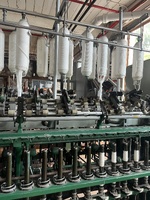
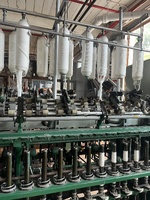
Al frente de usted hay una máquina industrial para hilar. Tiene 10 pies de largo y 7 pies de alto, con 18 bobinas y carretes en cada lado. Parece muy grande, pero muchas máquinas industriales para hilar eran cuatro veces más largas, por lo menos con 72 bobinas en cada lado, lo que significaba que una sola máquina hilaba por lo menos 144 hilos individuales al mismo tiempo. Casi todas las personas que operaban las máquinas eran mujeres, y se conocían como hiladoras. Una hiladora se encargaba de cuatro máquinas distintas; eso significaba que ella era responsable por los menos de 288 carretes de hilo al mismo tiempo. Las hiladoras no tenían tiempo para descansar—estaban constantemente en movimiento, caminando continuamente frente a sus máquinas, pendiente de cada carrete y bobina. Esta máquina fue construida en 1953 y propulsada por un motor eléctrico. Del tope de la máquina cuelgan largas bobinas cilíndricas de algodón sin hilar. Este se parece al hilo, pero realmente es una versión refinada del algodón producido por las máquinas de cardar. Hebras de algodón caen y alimentan la máquina. Cada hebra cae entre ruedas de goma, las cuales la estiran hasta que la hebra se vuelve fina, como el hilo. El hilo producido luego alimenta a un anillo para hilar que lo tuerce hasta endurecerlo; este proceso se conoce como hilado. Finalmente, el hilo producido es enrollado en una segunda bobina cilíndrica. Cuando estas bobinas están llenas, la máquina se apaga, remueve la bobina que está llena, y la reemplaza con una que esté vacía. Aunque las hiladoras probablemente no eran mutiladas por las máquinas, las máquinas eran peligrosas de otras formas. Las hiladoras podían inhalar pequeñas hebras de fibras de algodón, resultando en una condición pulmonar conocida como la ‘enfermedad del pulmón marrón’. Esta máquina del 1953 tiene un dispositivo integrado de seguridad—tubos de succión atrapan la mayor parte de las fibras que se desprenden y las empujan a un contenedor al lado derecho de la máquina, donde las trabajadoras no las podían inhalar. Pero esos dispositivos de seguridad no fueron instalados hasta poco tiempo. -

Hilado I
La Revolución Industrial Americana comenzó en 1793 en Pawtucket, Rhode Island, con la fábrica de hilar de Samuel Slater, la cual utilizaba energía hidráulica para hilar la seda que los campesinos de la zona le proveían. Poco tiempo después otras fábricas de hilar se establecieron a lo largo del sur de Maine, New Hampshire, Massachusetts, Rhode Island, y la zona oriental y central de Connecticut. Al igual que el resto de Nueva Inglaterra, en el período pos-revolucionario Connecticut poseía abundantes colinas empinadas y muchos ríos y quebradas caudalosas. Furiosos y espumosos, rápidos y serpenteantes, suficientemente fuertes para mover ruedas hidráulicas de tamaño industrial pero también suficientemente estrechos y llanos para represarlos con la tecnología del siglo 19, los ríos Quinebaug, Willimantic, Shetucket, Hop, Hockanum, y Yantic, entre otros, bajaban de las colinas de granito, fluían a través de estrechos cañones de roca gneis, y—a diferencia de los ríos del sur de Estados Unidos, los cuales cruzaban extensas llanuras costeras—rápidamente alcanzaban las aguas del mar. Willimantic estaba localizado a solo 17 millas del puerto de Norwich, un corto viaje en vagón y aún más corto por tren. -

Tejido II
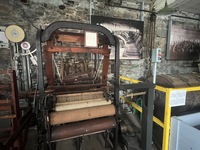
Detrás del telar hay una larga estructura de metal, con 336 ganchos de metal, para agarrar bobinas de hilo. Esta perteneció a la fábrica de seda Rosselin en Willimantic, la cual cesó funciones en 1995. Hebras de hilo se desenrollaban de la estructura de metal a los telares, en donde se convertían en urdimbre. Cada urdimbre pasaba a través de un ojete independiente en cada uno de los cables verticales del telar. Este telar tiene cuatro grupos de cables verticales. Una vez la tejedora ponía la urdimbre, ella luego usaba la máquina, la cual tejía la trama de hilos. La trama de hilos era cargada por lanzaderas voladoras, que asemejaban pequeños botes con puntas de metal a cada lado. Las lanzaderas voladoras se movían como a 60 millas por hora, y a veces se soltaban y volaban fuera del telar, golpeando a las trabajadoras causándoles heridas graves. Las tejedoras también sufrían pérdida de la audición debido al constante ruido ensordecedor de los telares. La fotografía en la pared detrás de usted muestra una tejedora entre dos telares alrededor del 1890 en una fábrica en Bridgeport, CT. Los telares estaban muy juntos unos de los otros, lo cual hacía moverse por el área de trabajo algo peligroso. La trabajadora tiene el pelo recogido, por su seguridad. También tiene las mangas de su camisa enrolladas. Su falda era corta para las convenciones sociales del tiempo, llegando hasta un poco debajo de la mitad de sus pantorrillas, para no tropezar con el refajo, y que éste no se ensucie en el suelo grasoso. El cinturón de cuero sostenía sus herramientas, y la protegían en caso que ella tuviera que apoyarse contra una máquina en movimiento para alcanzar algún objeto. A su derecha hay un largo telar de madera. El mismo usaba tarjetas perforadas con códigos para tejer hilos de múltiples colores en patrones intricados. A su izquierda hay un torneador grande de madera. Carretes ásperos hechos de madera de abedul blanco eran colocados en el torneador con una mezcla de arena y aserrín. El torneador se rotaba, tumbando los carretes hasta que estuvieran suaves. Más allá del interruptor del carrete, hay otro telar, manufacturado en Connecticut por la Compañía Atwood de Stonington, en 1875. -
Tejido I
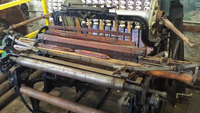
Entre las décadas del 1790 y 1860, el agua fue la fuente de energía con la cual funcionaban las fábricas textiles de Connecticut. Sin embargo, en la década del 1870, los dueños de las fábricas textiles comenzaron a instalar motores de vapor para hacer funcionar sus máquinas. Por la década del 1950, los dueños de fábricas comenzaron a usar motores eléctricos. La Willimantic Linen Company fue pionera en el desarrollo de la fuerza motriz eléctrica. En 1879, la compañía instaló alumbrado eléctrico en su inmensa fábrica de piedra Número 2. Al año siguiente, en 1880, la compañía contrató a Thomas Edison para que viniera a Willimantic e instalara bombillas incandescentes, las cuales habían sido inventadas el año anterior. La fábrica Número 2 es probablemente la primera que fue encendida con ese tipo de bombilla. La máquina de metal y madera frente a usted es un telar industrial utilizado para tejer ropa. Fue manufacturado en Inglaterra cerca del 1890 por la Compañía Knightly, y probablemente fue propulsada por vapor. Ni la Willimantic Linen Company ni la American Thread Company tejían ropa—ellas solo producían hilo. Pero muchas fábricas en Connecticut producían ropa, incluida la inmensa fábrica de algodón Ponemah en Taftville, la extensa fábrica de seda Cheney Brothers en Manchester, y otras fábricas textiles en Baltic, Plainfied, Danielson, Stafford Springs, y Willimantic, entre otros lugares. El telar de la compañía Knightly es un préstamo de la Universidad de Connecticut. -
Weaving II
Behind the loom sits a large steel creel, with 336 steel pegs, for holding bobbins of thread. The creel belonged to the Rosselin Silk Mill in Willimantic, which closed in 1995, and does not match the Knightly loom in size. Strands of thread would unwind from creels into looms, where they would become the warp threads. Each warp thread passed through an separate eyelet in one of the loom’s heddles, or vertical wires. This loom has four sets of heddles, called harnesses. Once the weaver put in the warp, she then operated the machine, which wove in the weft threads. The weft threads were carried by flying shuttles, which resembled small boats with steel points at each end. Flying shuttles moved about 60 miles per hour, and sometimes they came loose and flew out of the loom, striking workers and causing serious injuries. Weavers, who were mostly women, also suffered hearing loss, from the constant, deafening clacking of the looms. A photograph on the wall behind you shows a weaver standing next to two looms, around 1890 in a factory in Bridgeport, CT. The looms were very close together, which made navigating the factory floor hazardous. The worker has her hair pinned up for safety. She rolled up her sleeves. Her skirt was short by the standards of the time, reaching a bit below mid-calf, so that she won’t trip on the hem, and it won’t drag on the oily floor. Her leather belt held her tools, and it protected her if she had to lean against a moving machine to reach something. To your right is a large wooden loom called a jacquard loom. It used coded punch cards to weave threads of multiple colors into intricate patterns. On your left is a big wooden drum. Rough cut wooden spools, made from white birch, were placed in the drum with a mixture of sand and sawdust. The drum was rotated, tumbling the spools until they were smooth. Beyond the spool tumbler, is another loom, manufactured here in Connecticut by the Atwood Company of Stonington, in 1875. -

Weaving I
For many decades – from the 1790s through the 1860s – water was the source of power for running Connecticut’s textile mills. But in the 1870s, mill owners began to install steam engines to drive their machines. By the 1950s, they had shifted to electric motors. The Willimantic Linen Company was a pioneer in the development of electric power. In 1879, the Company installed electric arc lights in its massive, stone Number Two Mill. Then the following year, 1880, the Company hired Thomas Edison to come to Willimantic and install incandescent lightbulbs, invented only the previous year. Number Two Mill is likely the first factory to be lit with them. The steel-and-wood machine in front of you is an industrial loom, used for weaving cloth. It was manufactured in England around 1890 by the Keighley Company in England, and it probably was powered by steam. Neither the Willimantic Linen Company nor the American Thread Company wove cloth – they only manufactured thread. But plenty of other Connecticut mills did produce cloth, including the huge Ponemah cotton mill in Taftville, the sprawling Cheney Brothers silk mill in Manchester, and other textile mills in Baltic, Plainfield, Danielson, Stafford Springs, Willimantic, and elsewhere. The Keighley loom is on loan from the University of Connecticut. -
Spinning
The machine in front of you is an industrial spinning machine. It is 10 feet long and seven feet high, with 18 bobbins and bobbin feeds on each side. It looks big, but most industrial spinning machines were four times as long, with 72 or more bobbins per side – meaning that a single machine spun 144 or more individual threads at a time. The workers who ran the spinning machines were called spinners, and almost all of them were women. One spinner tended her side of four different spinning machines, meaning that she was responsible for 288 or more strands of thread at a time. Spinners never got to sit down – they were constantly in motion, pacing back and forth in front of their machines, watching each strand and bobbin. This spinning machine is a “ring spinner,” manufactured in 1953 and powered by an electric motor. At the top of the machine hang large, cylindrical bobbins of “roving,” or unspun cotton thread. Roving looks like yarn, but it is really a refined version of the sliver produced by the carding machines. Strands of roving feed down into the machine. Each strand feeds between rubber rollers, which stretch it until the strand become thin, like thread, a process known as “drawing.” The drawn roving is then feed further down, to a spinning ring that twists it to give it strength, a process called “spinning.” Finally, the finished spun thread is wound onto a second cylindrical bobbin. When these bobbins are full, the spinner shuts down the feed, removes the full bobbin, and replaces it with an empty one. Although spinners were unlikely to be maimed by their machines, the machines were dangerous in other ways. Small strands of cotton fiber came loose and were inhaled by workers, often resulting in “brown lung disease.” This 1953 machine has a built-in safety device – suction tubes capture most of the stray fibers and pull them into a “lint trap” on the right side of the machine, where workers would not inhale them. But such safety devices were not installed until very recently. -

Carding
The large machine in front of you is an industrial carding machine. It was manufactured around 1890 by the Saco-Lowell Company, which had plants in Maine and Massachusetts. Carding machines replaced hand cards – hand-held steel brushes with wooden handles once used to comb raw cotton or wool to get all the fibers aligned, a prerequisite for spinning. At one end of the machine, a combination of rollers and gears known as a “licker-in” feeds in a sheet of raw, uncombed cotton or wool called “lap.” At the other end, a steel roller called a “doffer” pulls out the finished product, a long strand of cotton or wool known as “sliver,” about as big around as a person’s finger. Carding machines were much faster than carding by hand, but they were also more dangerous. The center of the carding machine is a massive, rotating steel drum set with steel bristles, against which also rotated a belt of steel “flats,” which also had bristles. Frequently, carders – the workers who operated carding machines – got fingers, hands, or arms crushed by the heavy drums, or severed by the powerful gears. Carders were paid by the amount of sliver that they produced, so they often felt pressured to “speed up,” thereby increasing the chances of accidents. Here in Willimantic, until World War II, carders were all men, as the job was considered too dangerous for women. Beginning during World War II, though, women also became carders. Carding machines were powered by big leather belts, stretching up to heavy drive-and-pulley systems mounted on the ceiling, which in turn were powered either by central waterwheels (before the 1870s) or steam engines (after the 1870s). In the 20th century, electric motors slowly replaced steam as the main source of power. Carding machines are massive. This one is so big and heavy, that the Museum had to reinforce the floor to keep it from sagging, and we had to temporarily enlarge the door just to get the machine into the building. -

Water Power
The American Industrial Revolution started in 1793 in Pawtucket, Rhode Island, with Samuel Slater’s Spinning Mill, which harnessed waterpower to spin thread and yarn from wool provided by local farmers. It wasn’t long before similar mills sprang up along other waterfalls in southern Maine, New Hampshire, Massachusetts, Rhode Island, and eastern and central Connecticut. Like the rest of southern New England, post-Revolutionary Connecticut abounded with steep hills, free-flowing rivers, and fast-moving streams. Furious and foaming, swift and swirling, powerful enough to drive industrial-sized waterwheels but also narrow and shallow enough to dam with early 19th-century technology, the Quinebaug, Willimantic, Shetucket, Hop, Hockanum, Yantic, and other rivers tumbled out of Connecticut’s round granite hills, surged through narrow gneiss gorges, and – unlike Southern rivers, which had to cross wide coastal plains – quickly reached tidewater. Willimantic was located only 17 miles from the busy seaport of Norwich, a quick trip by wagon and an even quicker one by train. -
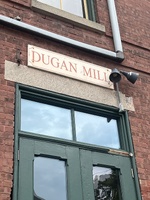
Dugan Mill Introduction
Welcome to the Dugan Mill. In this exhibit room, we explore what it was like to work in the textile mills during the Industrial Revolution. This building once was part of the great, sprawling American Thread Company factory complex, which from 1898 to 1985 dominated Willimantic and inspired the nickname “Thread City.” This building was constructed in 1877 as a warehouse for the Thread Company’s predecessor, the Willimantic Linen Company, which had been founded in 1854. Compared to the Thread Company’s cavernous factory buildings across the street, this building is relatively small. The big factories ranged in size from 300 feet to 840 feet long, while this former warehouse is only 63 feet long and 24 feet wide. The factories had large windows on all sides, to provide light, while this building has windows along only two of its sides. Each factory room had only one kind of machine, but dozens – sometimes hundreds – of them. In this exhibit, we only have one of each machine. But even though this room does not look exactly like a factory, it does provide visitors the opportunity to encounter many of the machines – and the rough wooden floors, heavy beamed ceilings, and rugged brick and stone walls – found in the rooms where the thread was made. The large photographs mounted on the walls of this room show the interiors of factories, with their many machines.
