Water Power
Item
-
Title
-
Water Power
-
Description
-
The American Industrial Revolution started in 1793 in Pawtucket, Rhode Island, with Samuel Slater’s Spinning Mill, which harnessed waterpower to spin thread and yarn from wool provided by local farmers. It wasn’t long before similar mills sprang up along other waterfalls in southern Maine, New Hampshire, Massachusetts, Rhode Island, and eastern and central Connecticut.
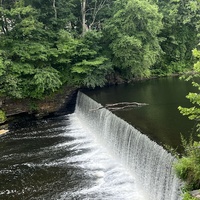
Like the rest of southern New England, post-Revolutionary Connecticut abounded with steep hills, free-flowing rivers, and fast-moving streams. Furious and foaming, swift and swirling, powerful enough to drive industrial-sized waterwheels but also narrow and shallow enough to dam with early 19th-century technology, the Quinebaug, Willimantic, Shetucket, Hop, Hockanum, Yantic, and other rivers tumbled out of Connecticut’s round granite hills, surged through narrow gneiss gorges, and – unlike Southern rivers, which had to cross wide coastal plains – quickly reached tidewater. Willimantic was located only 17 miles from the busy seaport of Norwich, a quick trip by wagon and an even quicker one by train.
-
Identifier
-
WTHM_DUGAN_02
-
Contributor
-
Connecticut Radio Information System, Jamie Eves
-
Subject
-
Textile industry; Willimantic (Conn.); Mill Museum; Audio tour
-
Publisher
-
Windham Textile and History Museum
-
Date
-
2020
-
Type
-
Sound
-
Format
-
audio/mpeg
-
Source
-
Connecticut Radio Information System (CRIS Radio)
-
Language
-
English
-
Relation
-
Dugan Mill audible exhibits series
-
Coverage
-
Willimantic, Connecticut
-
Rights
-
Connecticut Radio Information System (CRIS Radio). Used by permission.